Nature Notes: Prose and Poetry
When life gives you yellowhammers
At our Easter holiday cottage near Bisley, Gloucestershire, a dazzle of lemon-yellow birds burst out of a dry-stone wall. The wind took the mixed group of finches over brambles and across the stubbly fallow field. As they circled back, a few vivid yellows flashed against tall grey clouds. Perhaps it was the biting east wind, or weariness from grinding weeks of work, but the sudden appearance of these joyous birds was enough to make my eyes well up.
BIRD
By Liz Berry
When I became a bird, Lord, nothing could not stop me.
The air feathered
as I knelt
by my open window for the charm –
black on gold,
last star of the dawn.
Singing, they came:
throstles, jenny wrens,
jack squalors swinging their anchors through the clouds.
My heart beat like a wing.
I shed my nightdress to the drowning arms of the dark,
my shoes to the sun’s widening mouth.
Bared,
I found my bones hollowing to slender pipes,
my shoulder blades tufting down.
I spread my flight-greedy arms
to watch my fingers jewelling like ten hummingbirds,
my feet callousing to knuckly claws.
As my lips calcified to a hooked kiss
silence
then an exultation of larks filled the clouds
and, in my mother’s voice, chorused:
Tek flight, chick,goo far fer the Winter.
So I left girlhood behind me like a blue egg
and stepped off
from the window ledge.
How light I was
as they lifted me up from Wren’s Nest
bore me over the edgelands of concrete and coal.
I saw my grandmother waving up from her fode,
looped
the infant school and factory,
let the zephrs carry me out to the coast.
Lunars I flew
battered and tuneless
the storms turned me insideout like a fury,
there wasn’t one small part of my body didn’t bawl.
Until I felt it at last the rush of squall thrilling my wing
and I knew my voice
was no longer words but song black upon black.
I raised my throat to the wind
and this is what I sang . . .
Notes:
Black Country : Standard
charm : birdsong or dawn chorus
jack squalor : swallow
fode : yard
*
Male yellowhammers become even brighter yellow in spring. This happens as they moult after the previous years breeding— and when their new feathers come through, the dark new feather-ends wear down during the winter months, and they become bright as buttons in time for attracting a mate.
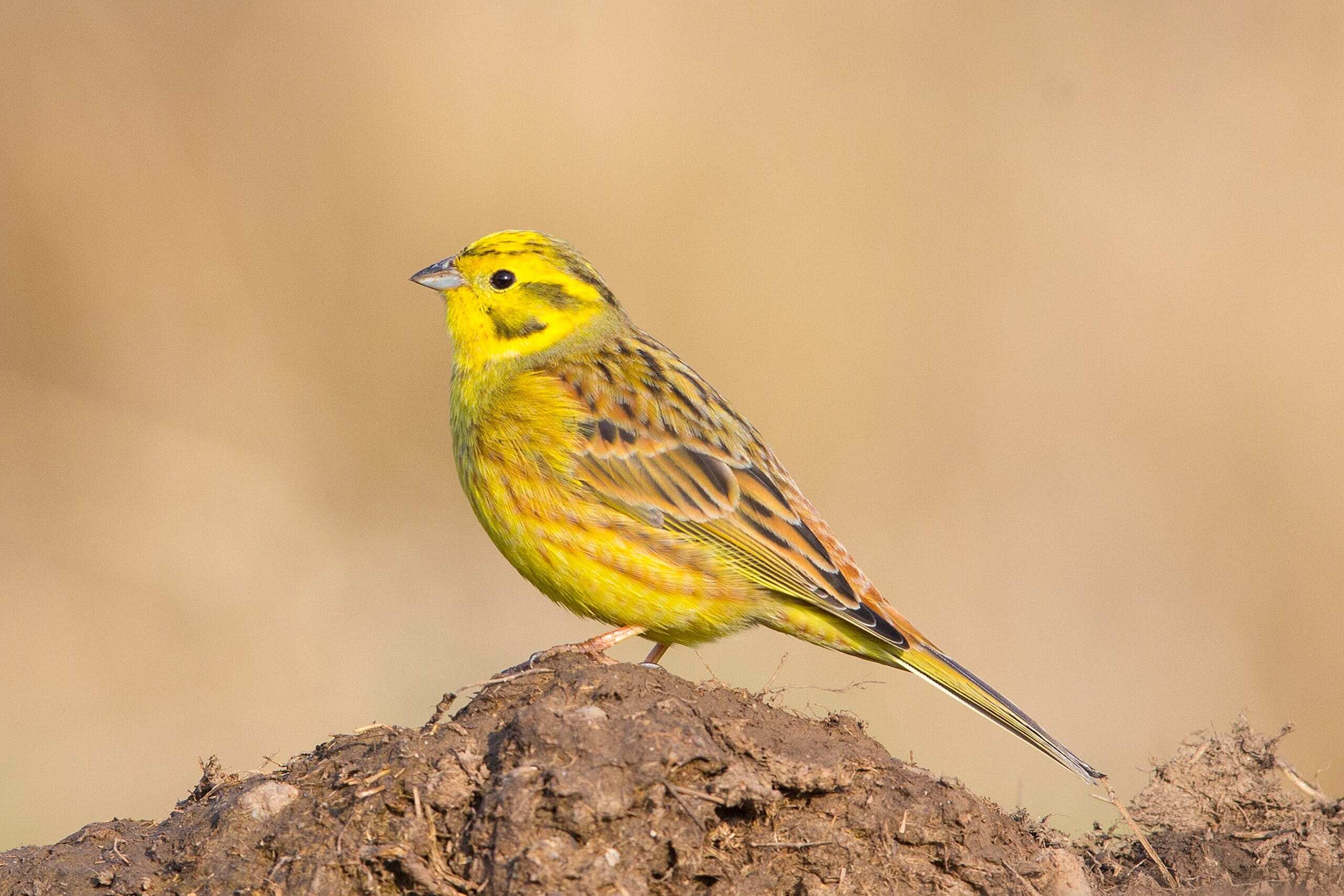
(Image source: Wikipedia)
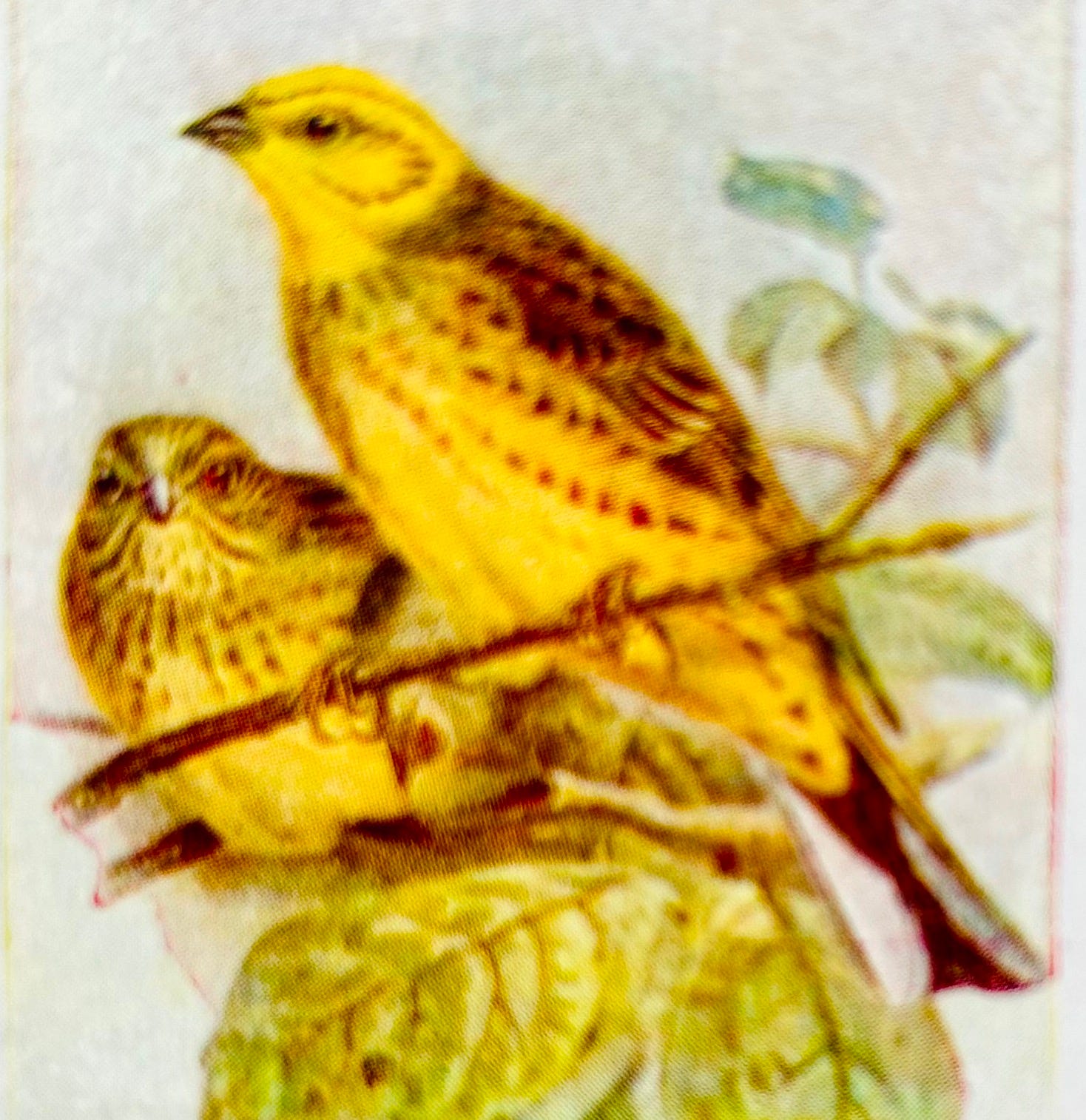
We watched their zesty brilliance every time we passed their field. And there they were again in the old cloth-bound copy of the Observer’s Book of British Birds at our rented cottage: the ‘yellow bunting’ page standing out among all the other finches. (These days bird books have refined the definition, and clearly separate the finches from the buntings.) Charmed as much by the pocket-sized antique book’s faded watercolours and tiny script I discovered from the author Ms S. Vere Benson, ‘Hon. Sec. of the Bird Lovers’ League’ (1952) that the yellowhammer is a seed eater that also feeds on insects. Relying these days on set-aside, seed-rich areas, and winter stubble on weedy arable land, yellowhammers also consume mayflies, grasshoppers, lacewings, and even worms and snails. All these food sources are fragile, and sensitive to agriculture; the survival of the whole ecosystem depends on less use of weedkillers and pesticides. Sadly, since 2002 yellowhammers have been on the red list for threatened species.
All this led me to think about the fragility of things.. And is this why we love birds so much? They seem so fragile, and yet they have a stoicism, so adaptable, so resilient.
And what about the yellowhammer’s strange name? Why yellowhammer? There is nothing hammer-like about the bird. It’s more us hammering them. But as with plenty of other bird names, there are hidden nuances— connections to a wider socio-cultural context, to the history and poetry of forgotten things, language just out of reach.
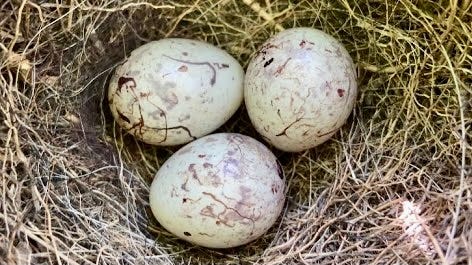
Yellowhammer eggs are laid in a nest made close to the ground, woven of grass and horse hair, hidden at the bottom of hedges or even camouflaged on the stubble. The whitish eggs have a scribbled pattern, in inky purplish-brown, from where they get their common name: ‘Scribe.’ In Spain they are known as ‘escribano cerillo,’ a nod to their delicate streaks of brown, and the yellow was seen as bright as a match flame or a golden beeswax candle. A common English name is the ‘scribble lark.’ These close-observations speak of a time when we noticed more about what was around us. They suggest that there were more of the birds to see and hear, and of course that we lived closer to them in every way.
So why ‘yellowhammer’?
After the Norman Conquest, when the Anglo-Saxon and Norman French languages had combined to make what became Middle English, and this old language fell into disuse, ornithologist Stephen Moss explains, many bird names no longer made sense. People made up new words that sounded plausible. The German for the bird is ‘Goldammer,’ and the Anglo-Saxon ‘yellow ammer,’ meaning ‘yellow bunting’, and this became our ‘yellowhammer’.
Rumour has it that this glamorous little bird also inspired the opening phrase of Beethoven’s Symphony Number 5. If you listen to a recording of the bird’s lilting tune, followed by the composer’s darker, more robust version, you can hear unsettling echoes and a distinct similarity. If the bird’s fleeting, melancholy anthem was captured by the maestro’s fading hearing, the musical genius of both seems even more startling and wonderful. It’s quite haunting. British folklore’s prosaic translation of ‘a little bit of bread and no cheese’ is still charming, but I think Beethoven wins on the imaginative leap. He must have made some fantastical connections, and I’d award him the birdsong translation prize.
Setting the record straight
A reader got in touch having read my piece on all this in the Times. He told me that having spent a lot of time making recordings of the related (and even more endangered) ortolan bunting in France, they decided it was that bird that Beethoven had heard, not the yellowhammer: https://www.atlasobscura.com/foods/ortolan-bunting-france
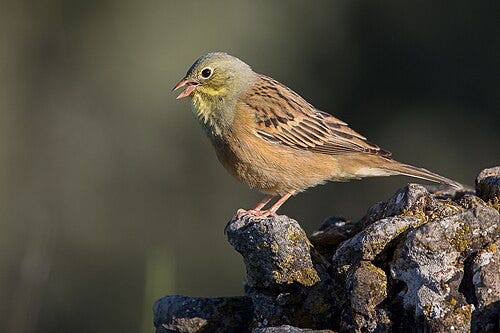
(Image source: Wikipedia)
I’ve listened carefully to both, and the songs are very similar, but the ortolan’s notes have a lilting gloom about them. A kind of sadder cadence. Maybe Beethoven knew their fate. And as well as all the other things he was upset or passionate about, he must have wanted to portray some of the horror and violence of the ortolan’s situation. This bird’s song, its deeper phrase, does seem to be a closer match to the startling duende, the dark, rumbustuous romance of the symphony. This is especially poignant when you consider what happened to these poor buntings in France. Beethoven’s music vibrates with empathy and feeling for what comes next.. Content warning: birds were harmed. Otolans were trapped, and then blinded. They were kept in cages to be fattened on figs and grapes. When ready, they were drowned in Armagnac. Then they were roasted and eaten by men who would only consume them wearing a napkin covering their head—presumably so God couldn’t see the horrific nature of what went on between plate and mouth. The story goes that President Mitterand of France ate roasted ortolans and they were his last meal before he died.
*
The Yellowhammer's Nest
BY JOHN CLARE (1793-1864)
Just by the wooden brig a bird flew up,
Frit by the cowboy as he scrambled down
To reach the misty dewberry—let us stoop
And seek its nest—the brook we need not dread,
'Tis scarcely deep enough a bee to drown,
So it sings harmless o'er its pebbly bed
—Ay here it is, stuck close beside the bank
Beneath the bunch of grass that spindles rank
Its husk seeds tall and high—'tis rudely planned
Of bleachèd stubbles and the withered fare
That last year's harvest left upon the land,
Lined thinly with the horse's sable hair.
Five eggs, pen-scribbled o'er with ink their shells
Resembling writing scrawls which fancy reads
As nature's poesy and pastoral spells—
They are the yellowhammer's and she dwells
Most poet-like where brooks and flowery weeds
As sweet as Castaly to fancy seems
And that old molehill like as Parnass' hill
On which her partner haply sits and dreams
O'er all her joys of song—so leave it still
A happy home of sunshine, flowers and streams.
Yet in the sweetest places cometh ill,
A noisome weed that burthens every soil;
For snakes are known with chill and deadly coil
To watch such nests and seize the helpless young,
And like as though the plague became a guest,
Leaving a houseless home, a ruined nest—
And mournful hath the little warblers sung
When such like woes hath rent its little breast.
Your work gives me so much strength and hope. Thank you.
What beautiful, bright birds!